Add a logo to a sail that already exists.
A sponsor arrives in June. The sail was built in March. DRY-INK is the answer to that problem: a white printable film, light and elastic enough for spinnaker and laminate cloth, that goes onto a finished sail and comes off again.
Ten per cent. Then we say no.
DRY-INK is for logos and text, not for covering a sail. Simple marks weigh about what the equivalent painted graphic would weigh, which is acceptable on a finished sail. Scale that up and it stops being acceptable.
So we drew a line and we publish it: if the graphic would cover more than about 10 % of a finished spinnaker, the answer is no. Not "expensive", not "possible with caveats" — no. Full coverage belongs on a sail that has not been sewn yet, printed with SPI-PRINT before assembly.
Older spinnakers get the same scrutiny. If the cloth is at the end of its life, putting graphics on it is money spent on the wrong thing, and we will say so.
- White printable self-adhesive film
- Light and elastic enough for spinnaker and laminate cloth
- Goes onto finished sails, new or used
- Removable — in our experience without adhesive residue
- Logos can be swapped between regattas
- Up to about 10 % coverage of a finished spinnaker
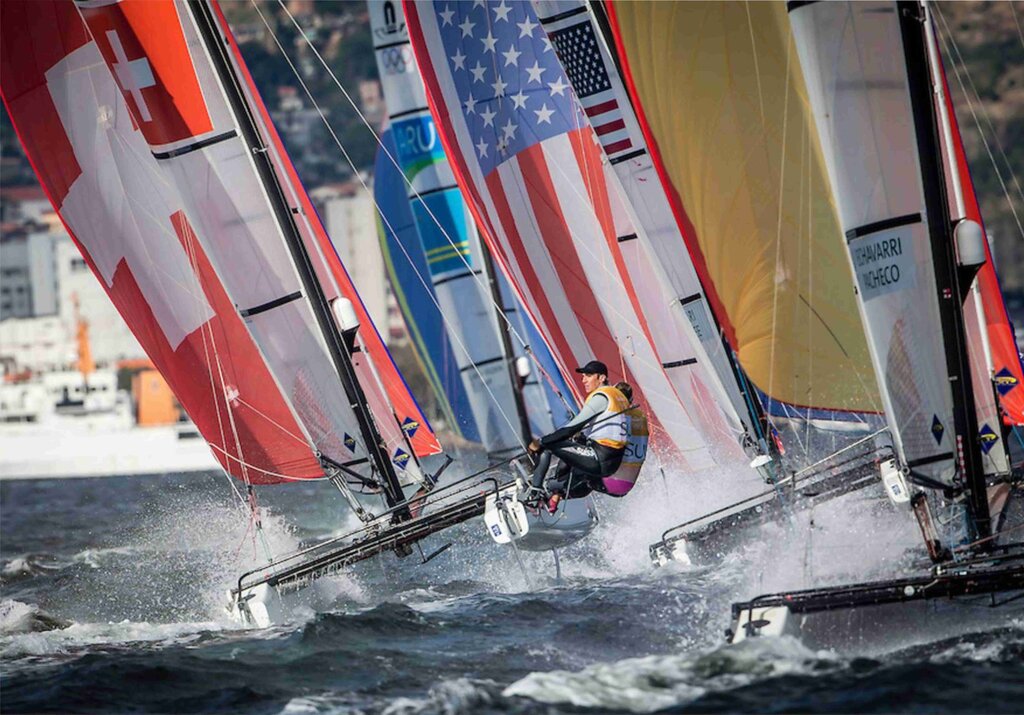
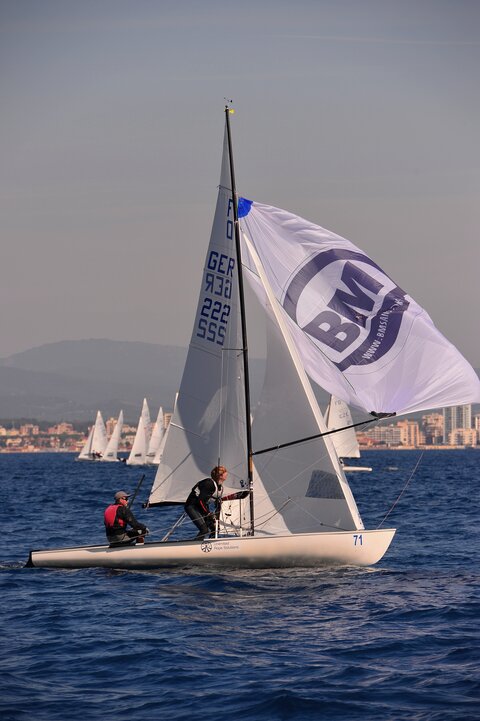
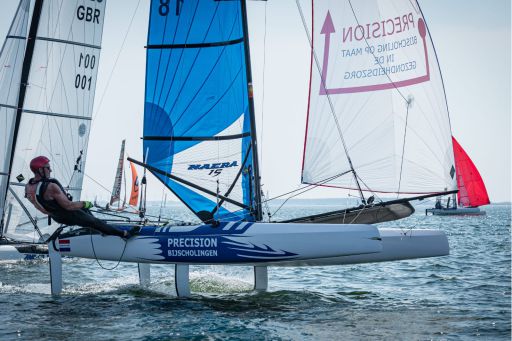
DRY-INK in numbers.
Prices are not published — most people find them lower than they expect. Send the sail and the artwork and you will have a figure.
Straight answers.
More on the answers page.
Can you put a logo on a sail I already own?
Yes. That is what DRY-INK is for, and it is a normal job rather than an exception.
Full answer →How much of the sail can it cover?
Up to about 10 % of a finished spinnaker. Beyond that we say no — full coverage belongs on a sail printed before assembly.
Full answer →Does it come off cleanly?
DRY-INK can be removed, and in our experience it does not leave adhesive residue.
Full answer →What does it weigh?
About what the same graphic would weigh painted on — roughly 28 g/m² for conventional painted sail graphics.
Full answer →